Glitch Mirror
Glitch steps outside the boundaries of conventional product design, conceived as a conceptual artwork that challenges our perception of reality and digital identity.
Form & Concept
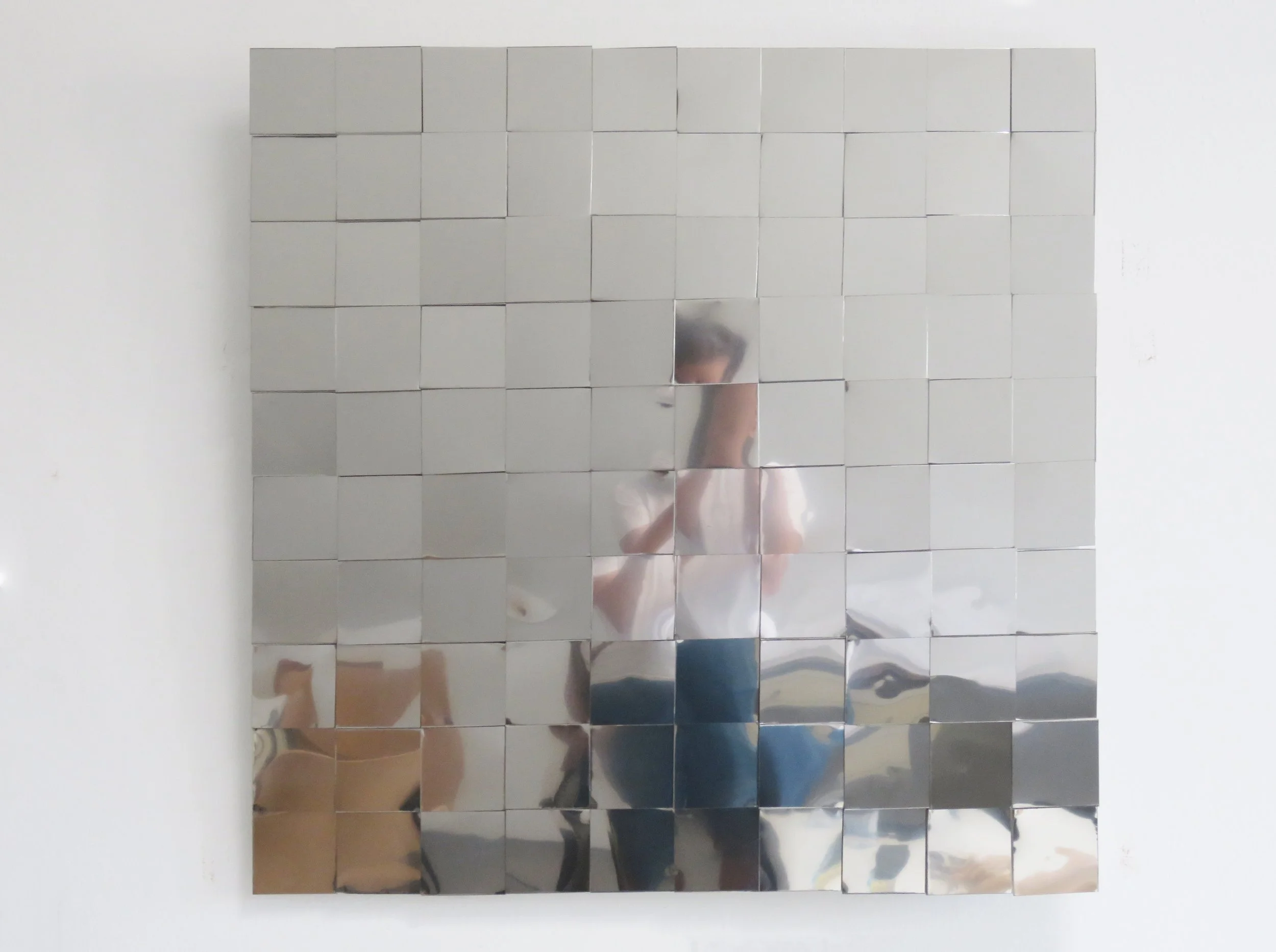
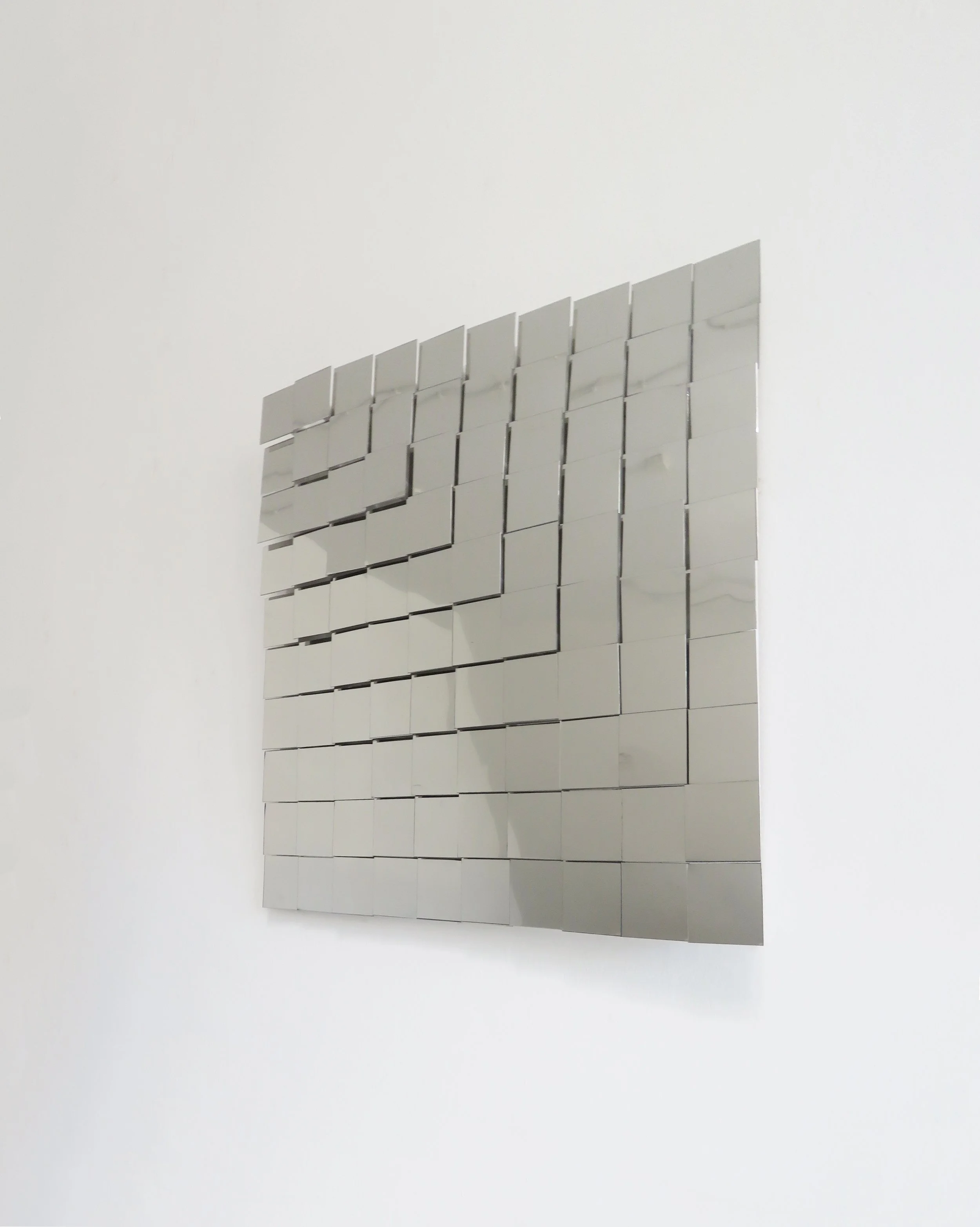
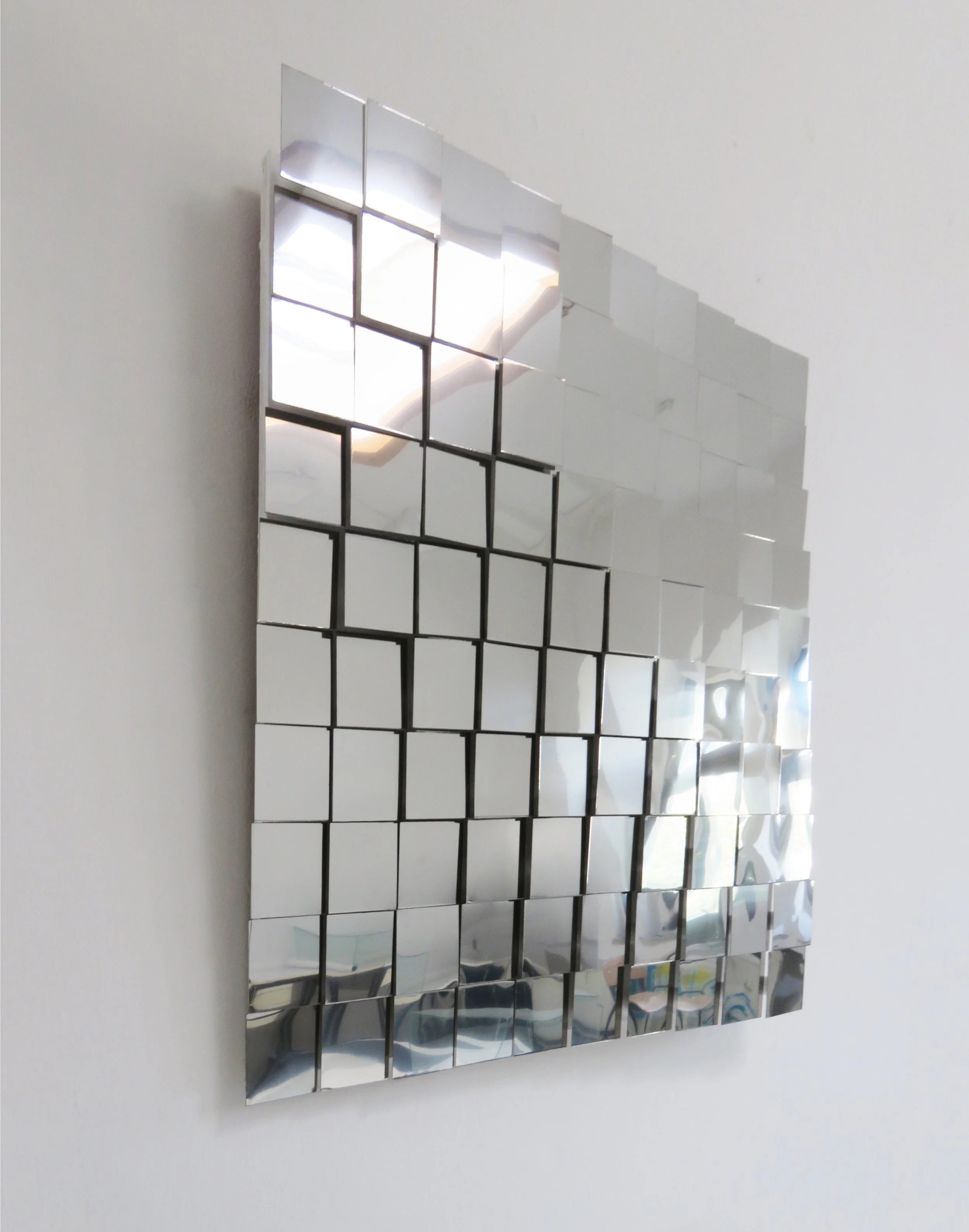
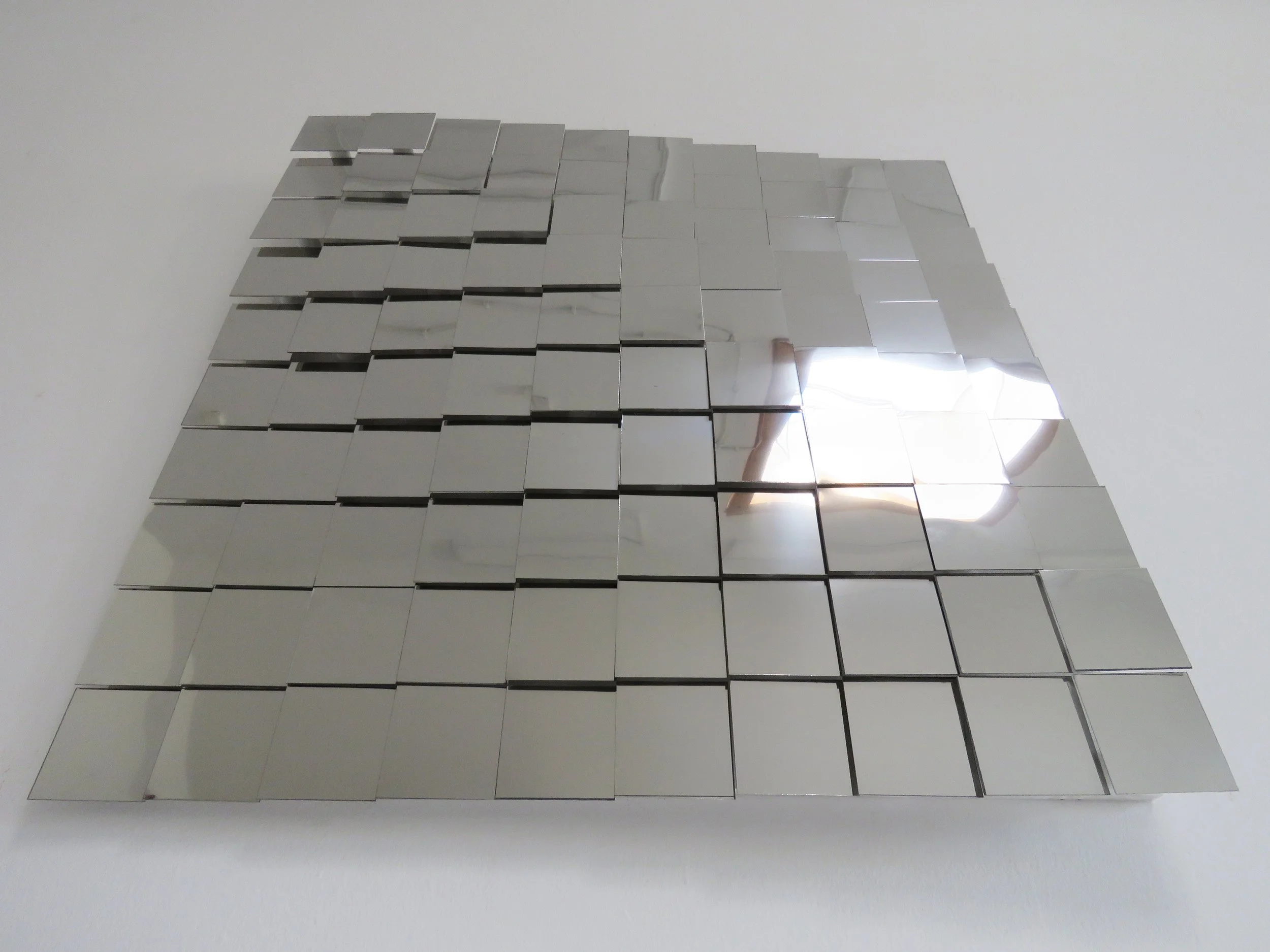
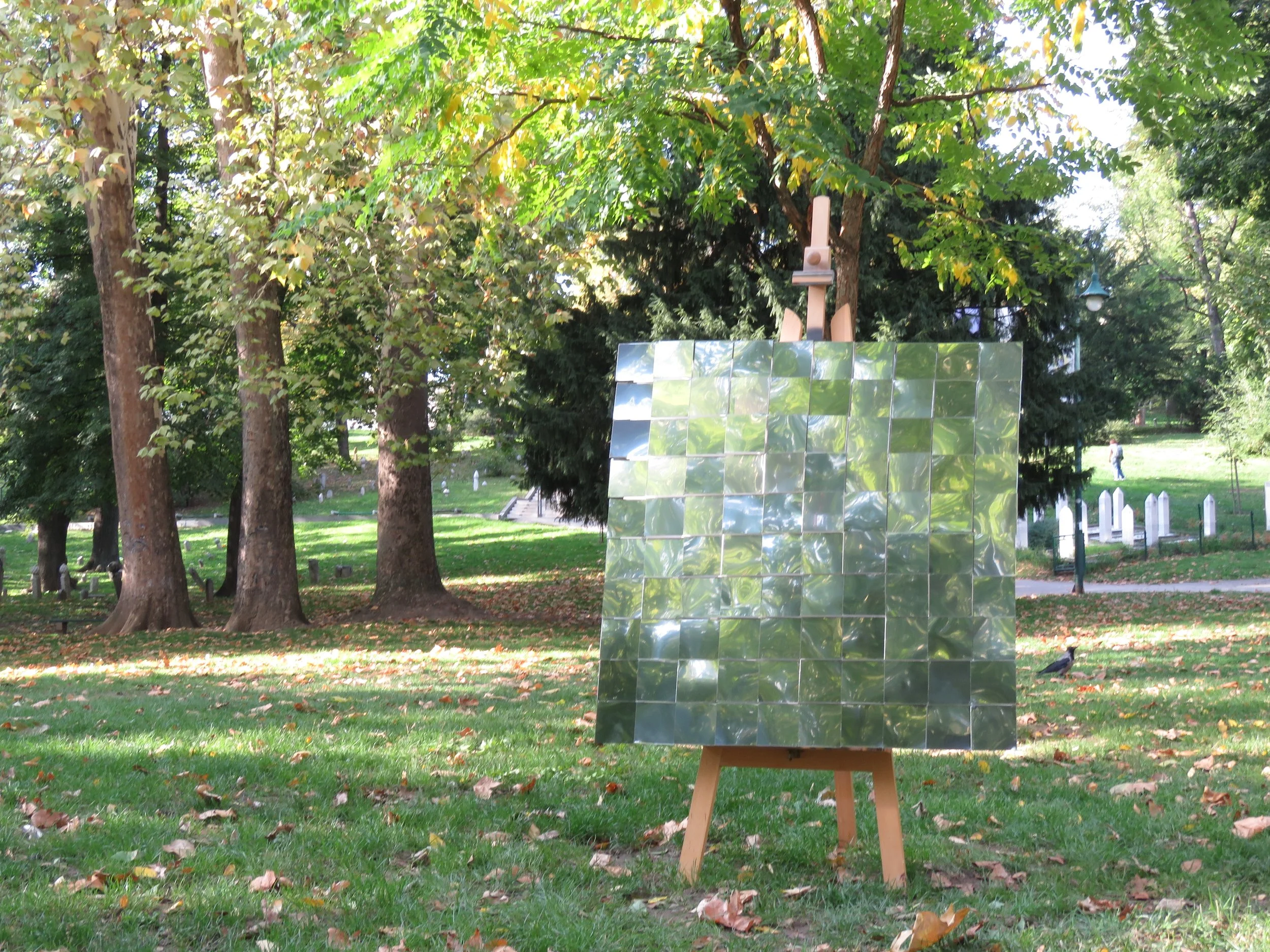
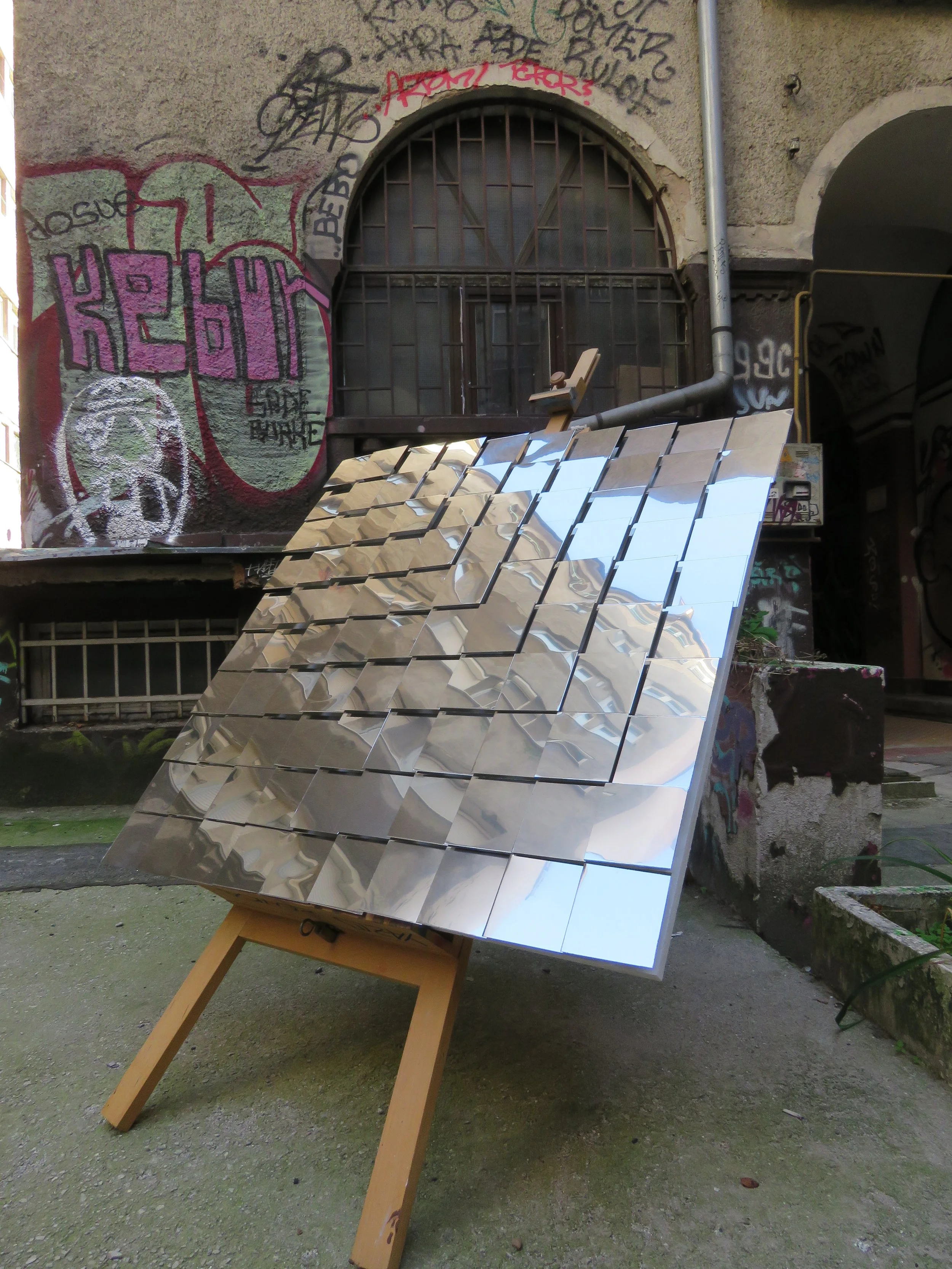
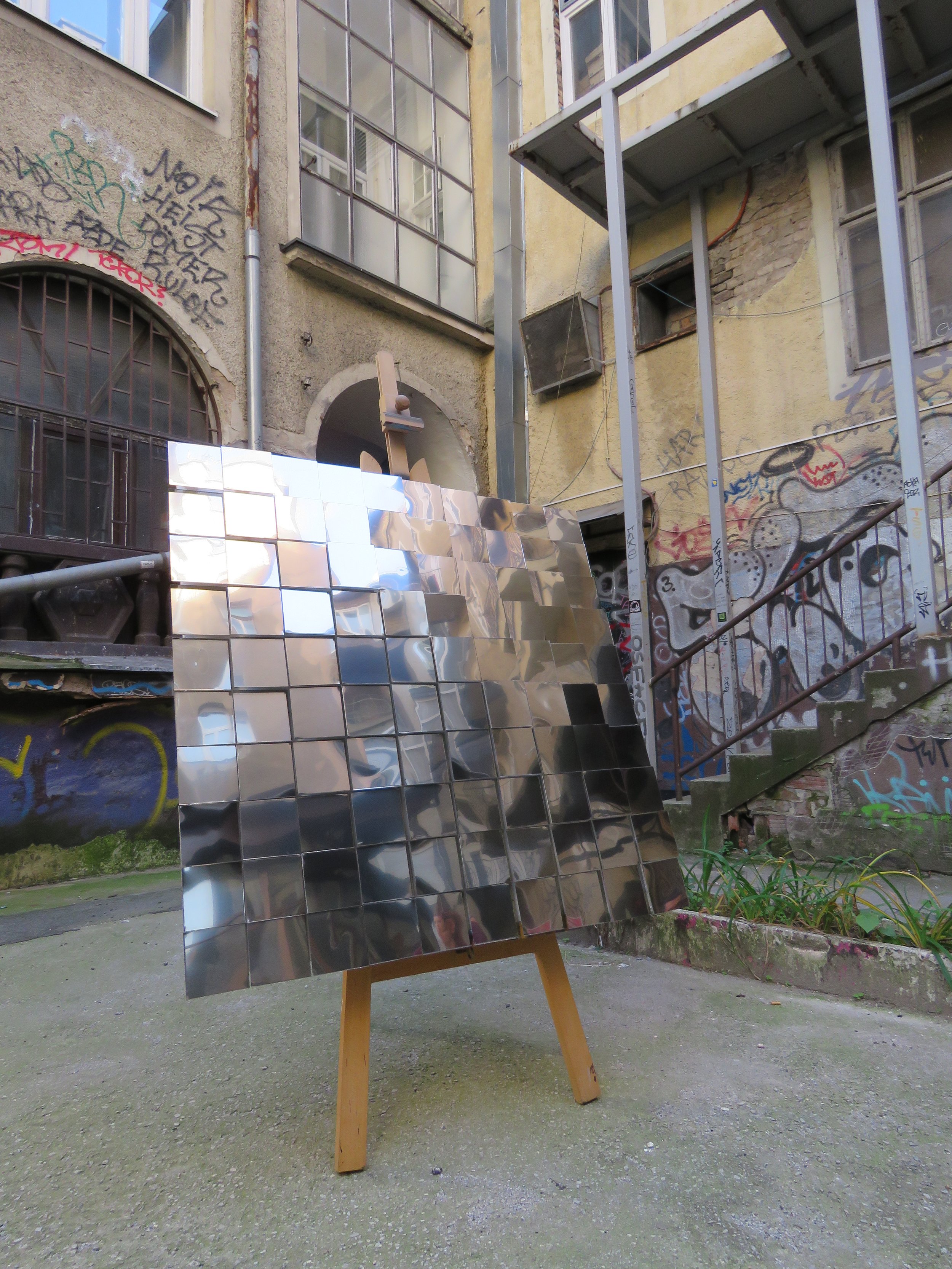
Composed of 100 highly polished stainless steel tiles arranged in a precise grid, the piece transforms the everyday act of looking at oneself into a metaphorical reflection of the modern age. Each tile functions as a miniature mirror, refracting light from different angles and fragmenting the viewer's image into a hundred separate parts — mimicking the pixel, the basic unit of the digital image, but transposing it into physical space.
The result is an anti-mirror: one that refuses to offer a clear reflection. Instead, identity becomes fragmented and destabilized, prompting the question — how much of our identity is defined in the age of digitalization?
Glitch as Aesthetic
The work draws inspiration from the glitch art movement, which finds beauty and creative potential in digital error. Here, the glitch is not a flaw but a deliberate deconstruction of visual communication. The effect — simulated through the stainless steel reflections — creates the illusion of digital interference in real, physical space.
An Active Object
Glitch subverts the traditional role of the mirror and pushes it toward conceptual art. It rejects passivity, compelling the viewer to become an active participant, an experience aligned with the postmodern principle of art as encounter. The mirror is no longer merely an object of utility, but a tool for exploring identity in a world of pixels, fragmentation, and constant change.